A bit about me
.JPG)
My name is Arnaud Zimmern. I'm a postdoctoral fellow at the University of Notre Dame in the Navari Family Center for Digital Scholarship. I teach and study the literature of early modern England with overarching interests in medicine, responsible innovation, and cultural preservation.
I use literature to understand the stories of medical progress that have proven most powerful and persistent in the face of moral criticism and repeated disappointment. My current book project – The Cure of All: Panaceas and Progress from Shakespeare to Milton – examines how early modern writers bequeathed mixed feelings about cure-alls even as their scientic counterparts embarked on a mission to cure all diseases, including death. Some of my work on that front is forthcoming in journals like English Literary History, although you'll find the seed of it in my work in venues like The John Donne Journal, Women Writers in Context, and the collected volume Marginal Figures in the Medieval and Early Modern World
In my digital scholarship, I strive to make rare, neglected, and complicated works of the early modern period more accessible and, importantly, more interactive. I'm currently on two projects: a IIIF annotated edition of the manuscript papers of the mathematician and linguist Thomas Harriot (1560-1621), and an annotatable documentary edition of James Howell's whimsical satire of humanism Therologia, or the Parly of Beasts.
Click on any of the tabs below to learn more about my journey.
Use the menu on the top left to learn more about my teaching and research.
2020-2023 | Postdoctoral Fellow, Navari Family Center for Digital Scholarship, University of Notre Dame
2021-2022 | Program Facilitator, Digital Pedagogy Fellowship, Navari Family Center for Digital Scholarship, University of Notre Dame
2020-2021 | Responsible Innovation Research Fellow, Center for Technology Ethics, University of Notre Dame
2015-2020 | Ph.D., M.A., English, University of Notre Dame
Dissertation: “Promising Panaceas in Early Modern English Literature”
Committee: Laura L. Knoppers (chair), Stephen Fallon, Susannah Monta, Evan Ragland
2014-2015 | Institut Philanthropos: Institut Européen d’Études Anthropologiques
Thesis: “La rue est-elle l’école du relativisme?”
Committee: Henri Torrione (chair), Fabrice Hadjadj
2010-2014 | B.A., Southern Methodist University
English, Mathematics, and World Languages (French, German)
Honors: President’s Scholar, summa cum laude, Phi Beta Kappa
Native | French, English
Conversational | German, Spanish
Intermediate reading | Latin
Beginner reading | Greek
C# for Unity
XML/XPath/XSL
HTML/CSS/JQuery
PEER-REVIEWED ARTICLES
2023 | “Panaceas in Early Modern Literature,” Routledge Resources Online—The Renaissance World, requested, forthcoming.
2021 | “Silkworms and Panaceas: Margaret Cavendish, Infinite Nature, and the Progress of Utopia,” English Literary History, accepted.
2021 | “Henry James’ Falstaff and the Better Part of Discretion,” special issue of Memoria di Shakespeare, ed. Maria DiBattista, accepted.
2020 | “Staging the Learned Lady: Dialogue and Interruption in Margaret Cavendish and Jean-Baptiste Molière,” Women Writers in Context, Women Writers Project, Northeastern University, online, accepted. (website)
2018 | “Upright in the Void: When John Donne Arrives in Heaven,” The John Donne Journal, vol. 36, accepted, forthcoming.
2017 | “Pariah and Parvenu: Reading ‘Cyclops’ Two Ways with Hannah Arendt,” James JoyceQuarterly, vol. 58.3 (Spring 2021), 116-34, print.
2014 | “Bad Math and Poor Eyesight: Reconfiguring Dante’s Hellscape,” Clarion Review.
BOOK CHAPTERS
2022 | “Margaret Cavendish and Lucy Hutchinson,” in Oxford History of Poetry in English. Volume 5: Seventeenth Century British Poetry, ed. Laura L. Knoppers, Oxford University Press, under review, forthcoming.
2018 | “One World Ambitions: Reading Donne’s Globalism Otherwise Post-9/11,” in Marginal Figures in the Medieval and Early Modern World, ed. Meg Lota Brown, Arizona Center for Medieval and Renaissance Studies, Brepols.
DIGITAL EDITION
2021 | Therologia, or the Parly of Beasts, by James Howell (1660) – an annotated & annotatable documentary edition.(web)
REVIEWS
2022 | “Angelica Duran and Mario Murgia (eds.), Global Milton and Visual Art,” Milton Quarterly, requested, forthcoming.
2018 | “Digital Cavendish Project,” Spenser Review, accepted. (web)
CONFERENCES ORGANIZED
2022 | Thomas Harriot's De Infinitis Workshop
2021 | The Online Olio Webinars 2021 (forthcoming)
2021 |The Thomas Harriot Summer Series (website)
2020 | The John Donne Society Webinars (YouTube)
2020 | The Online Olio Webinars 2020 (YouTube)
2019 | Employing Interdisciplinarity: Early Modern Legacies, Future Challenges (website)
INVITED PRESENTATIONS
2022 | “Romeo and Juliet and Cryonics: Preserving Juliet,”
Notre Dame Shakespeare Festival, South Bend, IN
2021 | “The Harriot Annotation Project: envisioning a IIIF scholarly edition” (slides)
Thomas Harriot in Global and Local Contexts: A Quatercentenary Conference
The Warburg Institute & University of London Birkbeck, online.
2020 | “Crises of Sovereignty in Jacobean Medicine”
Consortium for the History of Science,
Technology, and Medicine, Philadelphia, PA
2020 | “Things that Look like Plague, Things that Look like Cures”
Notre Dame Shakespeare Festival: Shakespeare in a Time of Plague, South Bend, IN
2019 | “Growing Young: Joan of Arc, John Falstaff, and the Age of Shakespeare’s Martyrs”
Young at Heart Ministries and Young Adult Ministries, St. Joseph Parish, Mishawaka, IN
2018 | “Caliban! Or, the Edge of Curse-Words”
Panel with former Archbishop of Canterbury Rowan
Williams on his book
2016 | “Networks to Braids and Back Again”
Public Relations Society of America, PRSA Dallas UnSummit, Dallas, TX
2014 | “Braiding Little Red Riding Hood”
Southern Methodist University, TEDxSMU, Dallas, TX (YouTube)
Oct. 2022 | “The Problem of Pain and the Problem with Cures in Milton's Paradise Lost”
Congres Conjoint de la Societe Francaise Shakespeare (SFS) et de la Societe d'Etudes Anglo-Americaines des XVIIe et XVIIIe Siecles (SEAA1718)
Sept. 2022 | “Romeo and Juliet and Cryonics”
Western Michigan University Medical Humanities Conference
Jun. 2022 | “Pain and the Bioethics of Paradise Lost”
Saint Louis University, The Center for Medieval and Renaissance Studies
Apr. 2022 | “Christ and Incurability in Donne and Milton”
RSA Dublin, Panel: “Donne and Medicine” (rescheduled from 2020)
Apr. 2022 | “Make Me New: Donne in Bronze, Burned Books, and Brassieres”
RSA Dublin, Roundtable: “Beyond Eliot”
Jun. 2021 | Organizer and Chair, Panel: “Medical Verse Satire”
Paper: "Harvey via Ptolemy: John Collop's Conceits of Circulation"
Scientiae: Disciplines of Knowing in the Early Modern World, Amsterdam (online)
Mar. 2021 | “Precedents for Sovereign Prescription”
Health Humanities Consortium International Conference (online)
Feb. 2021 | “Donne’s Holy Sonnets According to Eric Gill”
The John Donne Society Webinars (online)
Oct. 2020 | “Cavendish, Merian, and the Order of Insects”
The Online Olio Webinars, International Margaret Cavendish Society (online)
May. 2020 | “Mistress Quickly’s Quickening Care”
Shakespeare Association of America (adapted due to pandemic)
Oct. 2019 | “Christ and Incurability in Donne and Milton”
The Milton Conference, Birmingham, Alabama
Jun. 2019 | “‘Here grows the cure of all’: Milton and Matthew Griffith Peddle Panaceas”
International Milton Symposium, Strasbourg
Jun. 2019 | “Shakespeare’s Henry IV Part II in Light of Francis Anthony’s Potable Gold”
Scientiae: Disciplines of Knowing in the Early Modern World, Belfast
Jun. 2019 | “Panaceas and Butterflies: Cavendish on Universal Remedies”
International Margaret Cavendish Society, Trondheim
Feb. 2019 | Chair: "Donne and Materiality"
The John Donne Society Annual Conference, Baton Rouge
Sep. 2018 | “Incurables: What The Faerie Queene has to offer Sexaholics Anonymous”
Medical Humanities Conference, Western Michigan University, Kalamazoo
May. 2017 | “John Donne and the Posture of Humanity”
Space, Place, and Image in Early Modern English Literature Conference, Lausanne
May. 2016 | “Inexpressible Agony and Ecstasy: Wojtyla’s Love and Responsibility and Chaucer’s
Troilus and
Criseyde.”
51st International Congress on Medieval Studies, Kalamazoo
2022 | ND Learning Academic Innovation Sprint Grant ($5000) - to support pilot use of 360 video by students in Dr. Lisa Schirch's Digital Peacebuilding course Fall 2022
2021 | NEH/AHRC New Directions for Digital Scholarship in Cultural Institutions – “Unlocking Digital Texts: Towards an Interoperable Text Framework” ($150,000)
2020 | Short-Term Research Fellow - Consortium for History of Science, Technology and Medicine ($1,925)
2019 | Nanovic Institute - Conference Organizing Grant for “Employing Interdisciplinarity: Early Modern Legacies, Future Challenges” ($2180)
2019 | Graduate School at Notre Dame - Professional Development Award for Archival Research ($542)
2018 | Nanovic Institute - Professional Development Award for Archival Research ($1500)
2017 | Graduate School at Notre Dame - Professional Development Award for Library Research ($2600)
2017 | Nanovic Institute - Summer Travel Grant for Library Research and Conference Attendance ($3736)
2017 | Newberry Library - Renaissance Consortium Grant ($300)
2017 | Nanovic Institute - Academic-Year Travel Grant for Library Research ($2035)
INSTITUTES AND DISTINCTIONS
2021 | Solmsen Fellowship (alternate) – Institute for Research in the Humanities – University of Wisconsin-Madison
2020 | ShakespeareND Postdoctoral Fellowship (declined)
2019 | Folger Shakespeare Institute Fall Workshop - The Languages of Nature: Science, Literature, and the Imagination (led by Paula Findlen)
2019 | South Bend Digital Humanities Research Institute (DHRI)
2018 | Institut d’Histoire de la Réformation / Institute for the History of the Reformation, Geneva - Summer Intensive
2017 | School of Criticism and Theory, Cornell University
2017 | Institut d’Histoire de la Réformation / Institute for the History of the Reformation, Geneva - Summer Intensive
2014 | Digital Humanities Summer Institute (DHSI), University of Victoria
2021 | The International Margaret Cavendish Society – By-Laws Revision Committee
2020-2021 | The Online Olios – Co-Founder
2020-present |The John Donne Society – Webinars Manager
2018-2021 | The John Donne Society - Executive Committee
2018 | Spenser Studies - Assistant to the Editors, Susannah Monta and William Oram
2017-2018 | Milton Studies - Assistant to the Editor, Laura L. Knoppers
2017-2018 | Oxford History of Poetry in English, vol. 5 – Assistant to the Editor, Laura L. Knoppers
2017-2018 | University of Notre Dame Writing Center - Graduate Writing Tutor
2016-2020 | University of Notre Dame French Choir - Director
2016-2020 | Women Writers Project - Intertextuality Networks Research Initiative
2016-2020 | The Early Modern Circle @ ND - Co-Founder
2016 | Navari Family Center for Digital Scholarship Resident Digital Humanities Assistant
2016 | Hesburgh Library Rare Books and Special Collections Archival Assistant
My first love is teaching
check out some syllabi from courses
I've taught @ the University of Notre Dame

The Digital Pedagogy Fellows
Teaching data literacy and digital competency has become too important and too complicated to relegate to a few disciplines or departments; it's increasingly the job even of librarians and specialized centers to offer key training not only in digital scholarship but in digital instruction. This fellowship at the University of Notre Dame's Navari Family Center for Digital Scholarship was designed to tackle that. With my friend and colleague Ben Chiewphasa leading the way, I got to facilitate the fellowship for an inaugural cohort of outstanding doctoral students across STEM and the Humanities. Click here to find out more about what they've learned and accomplished

Medicine & the Poetic Ear
What is the connection between how physicians heal and how poets soothe? The answer, in part, has to do with listening. If better listening makes for better care, then studying poetry (as a spoken practice, as performance) is a privileged space for training the dexterity of the ear, the compassion of the heart, and the faculty of memory.
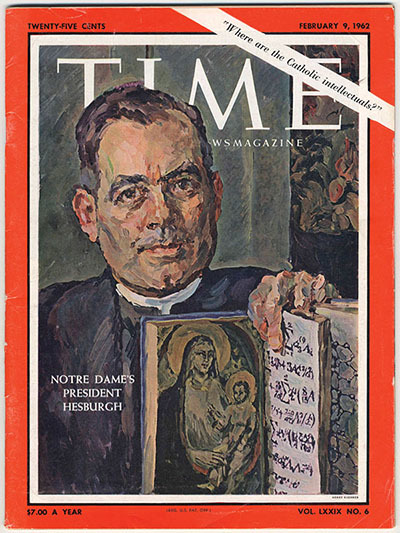
What's the difference between God
& Father Hesburgh?
The old joke on campus goes that God is everywhere, and Fr. Hesburgh is everywhere but Notre Dame. This Writing + Rhetoric course pays tribute to the intellectual spirit of Notre Dame’s unforgettable leader and unrelenting global human-rights and civil-rights activist. In this class, we compare and contrast the rhetoric of the artifacts around campus that bear Hesburgh's name (his library, his sculpture, even his tomb) against the rhetoric we find in the library's archives. How, at the end of the day, did Fr. Hesburgh use rhetoric and how has he become rhetoric, everywhere and especially at Notre Dame?
La Chanson Française
Le français s'apprend par la bouche - et pas juste en mangeant! Venez apprendre les grands classiques de la musique francophone et découvrez quelques bijoux rares et récents. Pas besoin d'être Pavarotti ou Beyoncé - venez comme vous êtes! (Psst: Y aura à manger aussi.)

Laugh till you die:
Shakespeare through Comedy
Shakespeare’s works are today's go-to literary text for comedies, spin-offs, ads, and spoofs. How and why does his comedy provide relief while putting things in relief? And how come so many of his tragedies (Othello, Romeo and Juliet, Hamlet) seem poised to make us laugh only to take a dark and violent turn?
That's all the teaching I've done so far!
but check out some other courses I'm yearning to teach
Poetry as Craft:
Brit Lit 1
This course introduces you to great pre-modern works of poetry as feats of artisanal labor. But we'll focus on process, mistakes, and materials. Some of the key questions we'll ask are: what do we do with an artifact when we don't know who it’s author or craftsman is? How do we secure its meaning when anonymity and forgotten old words get in the way of accessing original intent?

The Perfect Epic,
A Juicy Classic
John Milton's Paradise Lost.
Enough said.
If you haven't read it, come read it.
This course will walk through his major poem, several sonnets, and some of his prose to give you a
first taste -- will you be seduced?

Love, Loved Ones,
& Shakespeare
Let's dive deep into his famous sonnets and read them closely, even if we're far apart. In this 12-day, winter-term course, we'll discuss Shakespeare’s writings on youth, age, beauty, love, and mortality & we'll use his sonnects to connect with others, to remedy the isolation and longing caused by the pandemic's social distance.
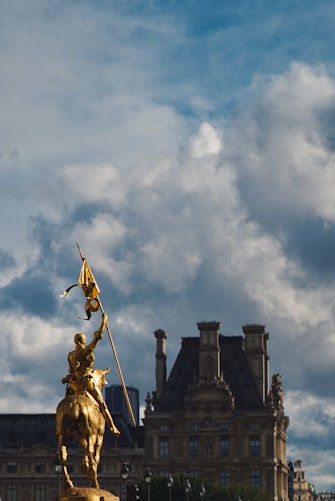
Joan of Arc
Rememburned
How has one French Catholic virgin, peasant, and martyr become an icon for lesbian feminists, royalist nationalists, international Marxists, opponents of transhumanism, teen activists, online manga addicts, and so many other “-ists” and "-icts"? Just how is that possible? The answer has everything to do with the power of stories and the aura around "medieval times."
One day I'll fill these other tabs out...
but, in the meantime,
every teacher moonlights as a researcher

and I love (re)searching
especially Early Modern Literature
(the really good stuff)
+
the history of medicine
digital cultural preservation
& many
other things
The Circulation of Circulation
William Harvey published his discovery that blood circulates around the body in 1628. By the end of his life, most everyone in Europe and people as far away as Brazil believed him. It's an unprecedented achievement in science. So how did his ideas get around? This mapping project uses Palladio, Google Maps, and Leaflet.js to revise years of bibliographic work by Sir Geoffrey Keynes et alia and to fashion a new, more complete image of how texts and ideas circulated in the early modern world and how a little-known English physician became "our great Dr. Harvey" and the father of modern, experimental medicine.
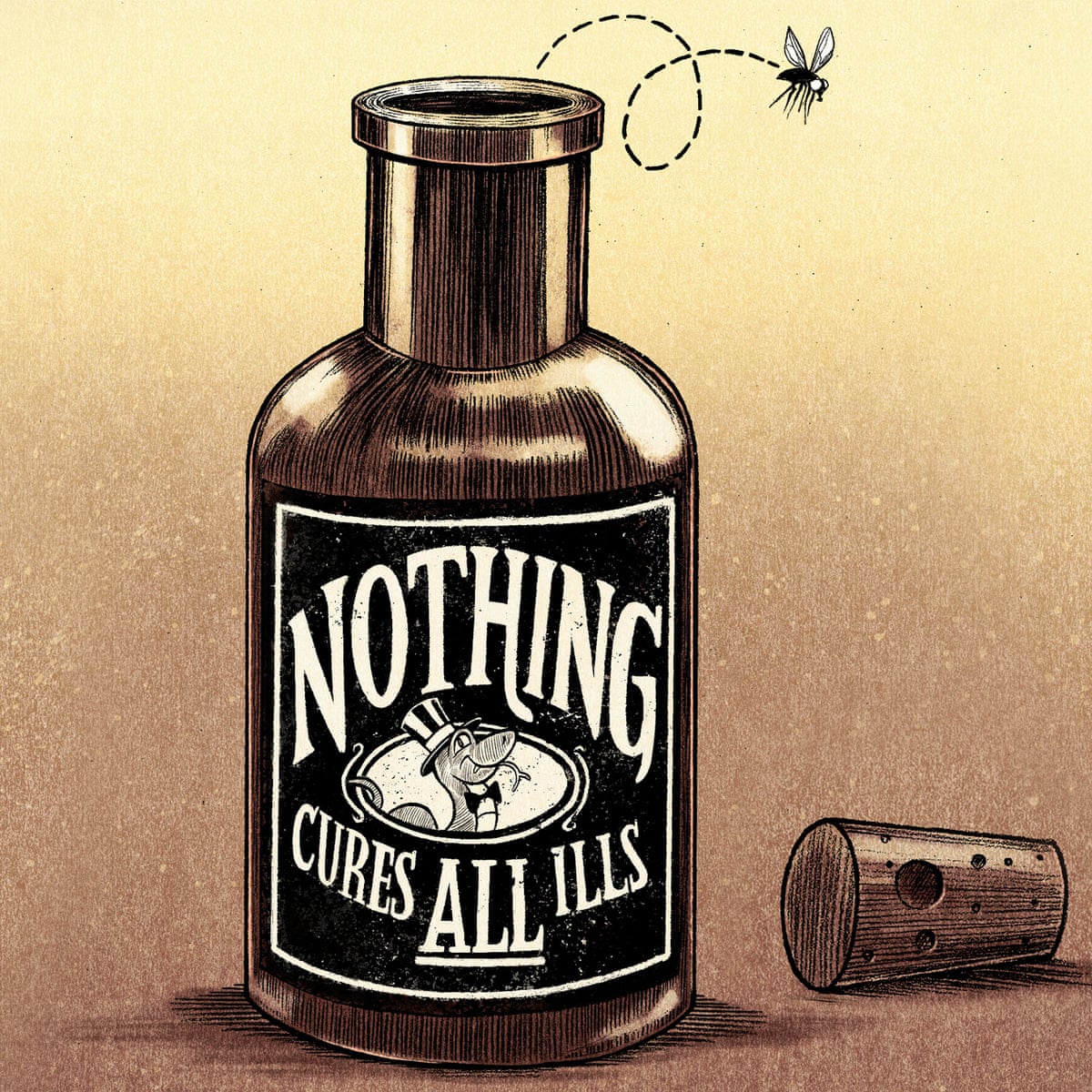
The Cure of All
My first book project is about the problem of pain and the promises of cures. Early modern literature has a lot to offer by way of critique and by way of alternatives to what Dr. René Dubos famously called our utopian, panacean quest for eternal and instantaneous health. The Cure of All covers many of familiar names like Francis Bacon, Ben Jonson, Margaret Cavendish, John Milton, and Jean de la Fontaine but places them in unfamiliar territory: as critics of how we tell the stories of medical progress.

The Parly of Beasts
James Howell's Therologia (1660) is a forgotten jewel of a text: this digital edition gives
it a new shine, with notes and other helpful tips for a new generation of readers. Playful, misanthropic, at times even elegantly
so,
Howell's book hedges its bets for and against the project of civilization as Prince Pererius, the
wandering
humanist, goes in search of humanity on the enchanted island of Morphandra. It certainly inspired
Jean de la Fontaine, it anticipates Swift in many ways, but what might it offer us in the age many are calling the Mis-anthropocene.
{Or take a sneak-peek.}

The Online Olios
Margaret Cavendish is arguably the most exciting female writer and thinker of Shakespeare and Milton's time. Haven't heard of her? Come learn from the world's up-and-coming experts. These yearly webinars, which I helped co-found with Mariah Spencer and Sophia Richardson, celebrate new inquiries into the work of 17th century England's avant-garde Duchess of Newcastle.

How now, Thomas Harriot?
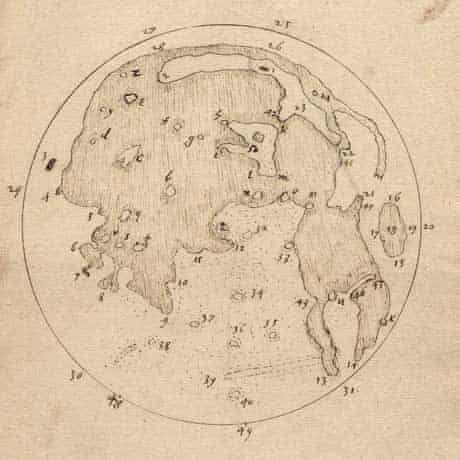
This is a major project in digital cultural preservation: the notorious papers of Thomas Harriot (1560-1621), whose copious mathematical notes (over 8000 pages) were divided between archives, jumbled and disorganized by many hands, and never had any organization to begin with. What's in them? The discovery of the law of refraction, the earliest hand-drawn telescopic observations of the moon, an intimate portrait of a still-born anencephalous child, and lots and lots of anagrams and cyphers -- in a word: mysteries. With mathematicians and historians of science from the Thomas Harriot Summer Series and the Thomas Harriot Seminar, we're building an annotated digital edition with IIIF.
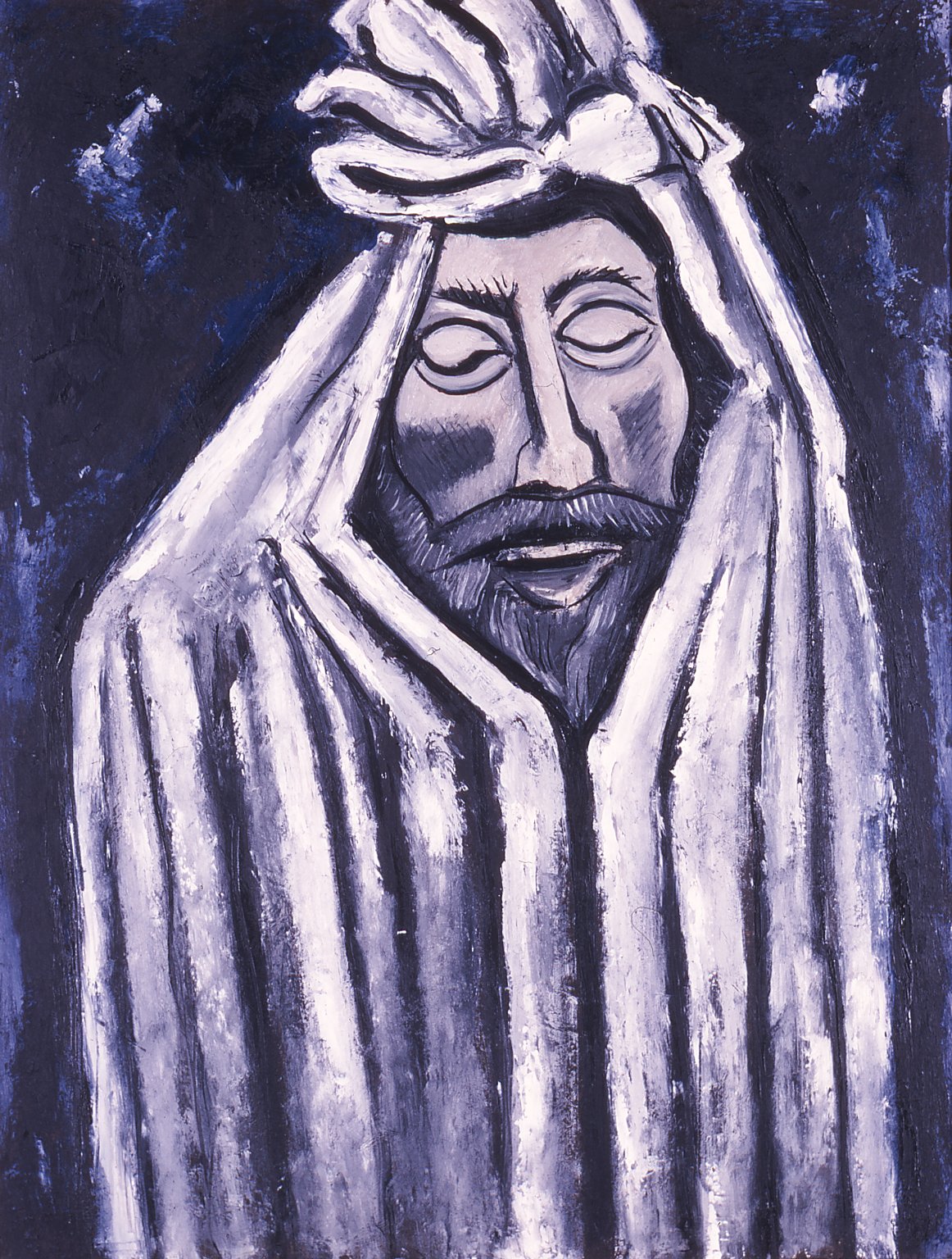
Make Me New
John Donne, poet extraordinaire, inspired countless painters, sculptors, librettists, & dancers across the globe, among them huge names like Marsden Hartley, Eric Gill, Leslie Dill, Clifford Rainey, Stanley Spencer, June Wayne. My second book - Make Me New: John Donne's Other Lovers (1911-post 9/11) - is about how they've taken up his work and what they've done with it. Pun very much intended.

3D Renaissance
Since Gutenberg, we've taken ourselves to be people of the book in an age of print. But a new age of print - 3D print - is upon us. This project is about using new tech to produce and restore old artifacts. I'm printing alembics, aludels, orories, and other gizmos of early modern science that too often stay behind museum glass, so that my students and those of others can learn to read the books in light of the objects.